When digging foundations, pouring concrete slabs or installing sewers, a few millimeters are often the deciding factor. A height error may seem like a small thing at first, but as the construction progresses, it means downtime, rework and wasted material. This guide to choosing a construction level will help you choose a device based on the actual work, not just the price or the color of the laser beam.
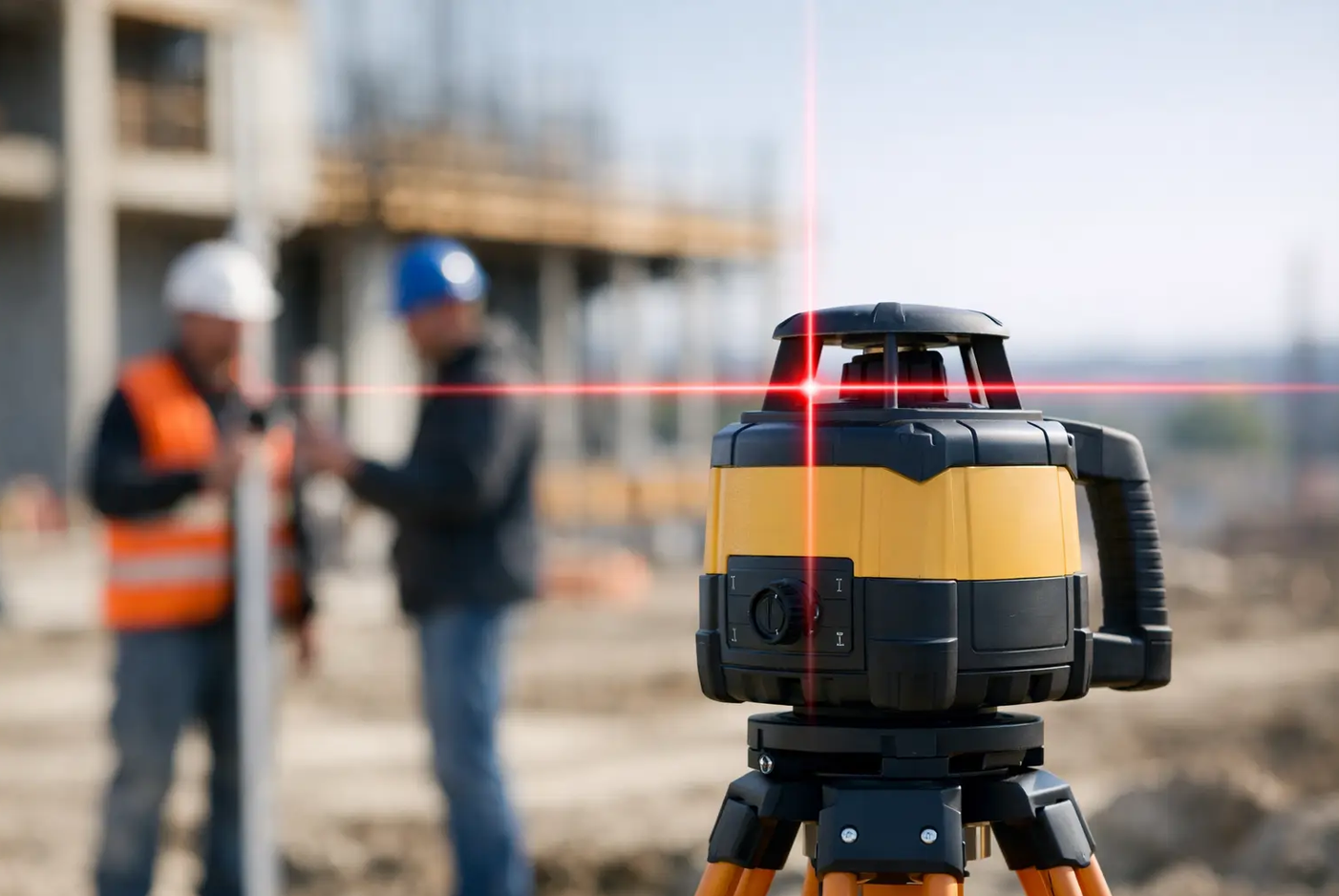
A construction level, or more precisely a rotating laser, creates a horizontal plane throughout the entire building or plot. When working with the receiver, you do not need to constantly see the beam with your eyes. The receiver will capture it on a staff even in direct sunlight and show whether you are above, below or exactly at the desired height. This is why a rotating laser is practical for earthworks, formwork, concreting and installations at a greater distance.
Guide to choosing a construction level by job
First, decide what you will be leveling most often. For common work at height on a construction site, an automatic self-leveling rotating laser with a receiver, batten and tripod is sufficient. You can use it for foundation strips, formwork, concrete slabs, setting curbs, suspended ceilings or checking heights during masonry work.
If you are doing excavations, drainage, access roads, sewers or landscaping with a slope, look straight for a digital slope model . This allows you to set the slope separately in the X and Y axes. A conventional self-leveling laser keeps the plane horizontal. The digital model can tilt it specifically according to the entered value, which saves a lot of manual recalculation when setting a slope.
For interior fitters, a rotary laser can also be a good choice, especially if they are working in larger halls, with long partitions or need to transfer height between rooms. However, it may not be the best choice for small jobs in one bathroom. A cross laser will often suffice there. A rotary level makes sense where you need a longer reach, work with a batten or an exact plane around the entire space.
Standard or digital slope model?
A standard rotating laser is the right choice when you want to quickly create an accurate horizontal plane. After placing it on a tripod, the device automatically levels itself within its self-leveling range. It is easy to operate and can be relied on by a large team for repeated work.
A digital grade laser costs more, but its benefits are clear when working with slopes. An example is a sewer pipe, where you need to maintain a specific slope, or a slope of the terrain during drainage. Setting the percentage of slope in one or two axes is more accurate and faster than setting up a tripod, laboriously adjusting the height, and constantly checking the differences on the staff.
However, don't buy the digital version just because it has more features. If nine out of ten jobs consist of concreting, foundation work, and routine height measurement, a standard automatic level is simpler, cheaper, and completely sufficient.
Red or green beam: what you will see on the construction site
The color of the beam is not just a design difference. The green beam is more visible to the human eye, so it is better used when working indoors, in the shade or during assembly, when you are guided directly by the line of sight. Under the same conditions, it looks more prominent than red.
However, when outdoors in bright sunlight, the visibility of the beam itself is no longer the main criterion. For longer distances, you need an external receiver for both red and green lasers. The receiver captures the rotating beam and uses a display, arrows or an audible signal to guide the worker to the correct height. Anyone who plans mainly excavations and outdoor work should not buy a green laser with the idea that it will replace the receiver in the sun.
A red laser is usually more affordable and is a practical solution for many construction jobs with a receiver. A green model is especially worthwhile if you often work indoors or need to see the beam continuously without a batten. So it's the work environment that matters, not the general statement that one color is always better.
The receiver decides the measurement speed
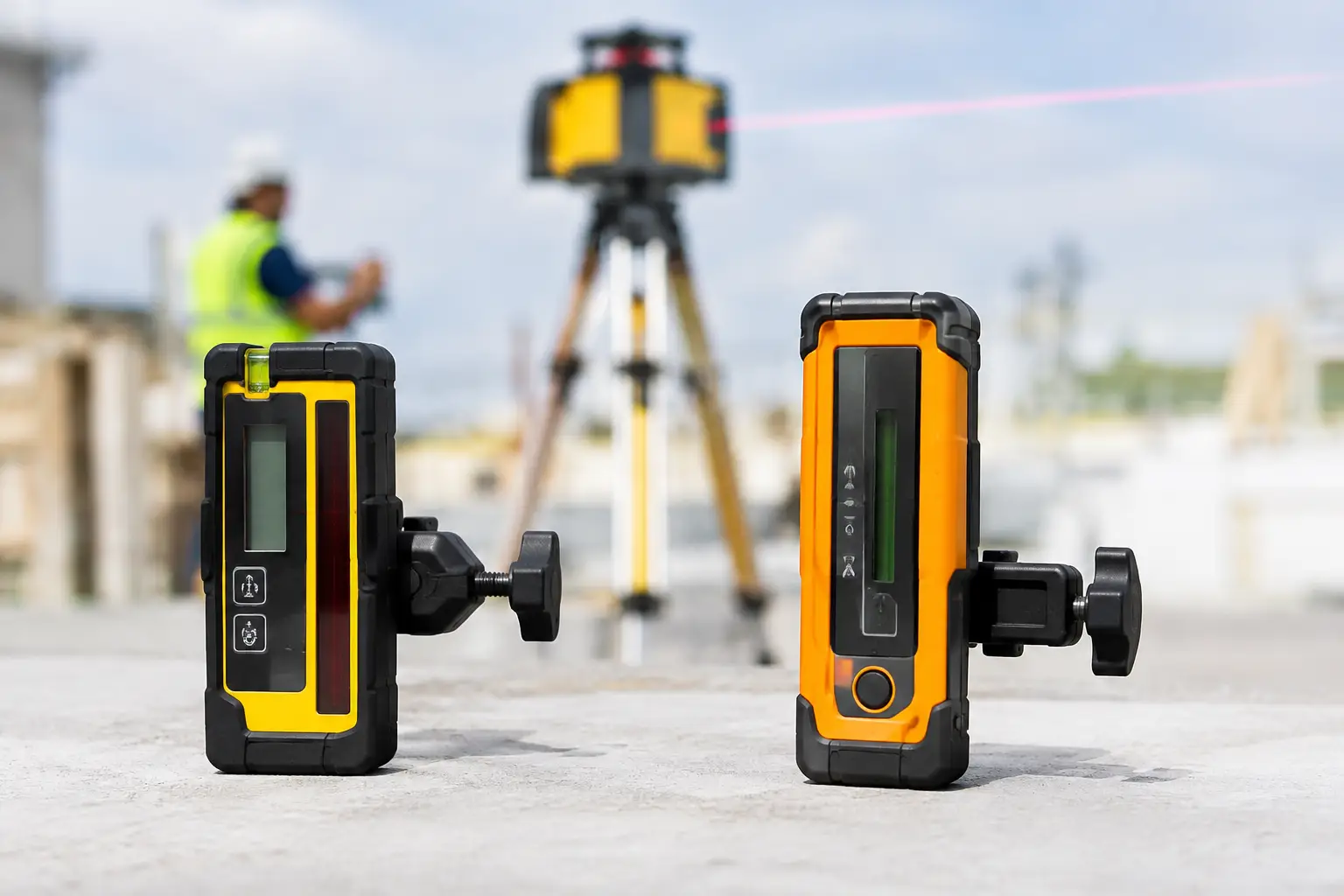
You can only use a rotating laser without a receiver to a limited extent. For professional work, a receiver is the basis of the equipment, because it gives you precise information about the position of the plane on the staff. A regular receiver shows the direction in which you should move the staff or work point. This is sufficient for most construction tasks.
A digital receiver with a millimeter readout is useful when you want to see the deviation from the plane directly. Instead of gradually finding the center, it will show you, for example, that you are 12 mm above the desired height. This is practical for precise concreting, inspection of finished surfaces and where you want to reduce the amount of arguing between the person at the lath and the person at the machine.
When comparing kits, check to see if a receiver is included, what kind of pole mount it has, and whether the pole is long enough for your height differences. A five-meter pole is a usable base for many excavations and foundations. For steeper slopes or deeper trenches, a longer pole or a different workflow may be necessary.
Accuracy, range and IP54 protection without unnecessary shortcuts
For example, the accuracy of rotary lasers is stated in millimeters at a certain distance. A lower value means a more accurate measurement. However, in normal construction, it is equally important to position the tripod correctly, have a stable base, and check the device before starting work. Even a precise laser will not solve a tripod stuck in soft clay that moves during the day.
The range is often listed with the receiver. This is the correct figure for outdoor work. Don't be fooled by the distance of the visible beam, which varies with light, dust and surface. For a family home, a smaller plot of land or a regular project, it is important that the range covers the work area with a margin. For more extensive field work, choose a model with a larger working diameter.
IP54 protection means protection against dust in quantities that do not impair the function of the device, and against splashing water. This is a reasonable standard for construction, not permission to leave the laser in the rain or wash it with a hose. Protect the device during transport as well. A case, clean tripod threads and an undamaged laser window will extend the service life more than any information in the catalog.
Also check the equipment and service
When comparing prices, compare the entire work set, not just the laser body. Separately purchased receiver, holder, tripod, battens, charger and case can significantly change the final price. A complete set makes sense especially for the first purchase, when you want to work immediately after delivery.
It's worth checking these four things before ordering:
- whether the device is calibrated before sale,
- whether you will receive Slovak instructions and clear training,
- whether batteries, chargers, holders and other parts are available,
- who will perform warranty and post-warranty repairs when the device is dropped or starts measuring inaccurately.
A laser is a measuring instrument, so calibration is not a formality. With frequent use, after a strong impact or if a deviation is suspected, it is a good idea to check its accuracy. Service and parts in stock are often of greater value than a small difference in purchase price. If the instrument is sitting in your workshop during an unfinished job, the euros saved will quickly be lost.
Rotary Lasers - Levels supplies new devices pre-calibrated and allows for personal testing and training in Švábovce near Poprad. When choosing, you can directly compare how the receiver, digital reading and inclination adjustment work - even before you take the equipment to the construction site.
Choose a level based on the jobs you do every week, not just one special job a year. The right laser with the right receiver, staff, and reliable service will save you time on the construction site with every meter of height transferred.