A rotating laser that shows the plane a few millimeters off can do more damage to a foundation slab, screed or sewer slope than a completely malfunctioning device. With a malfunctioning machine, work stops. With an inaccurate one, it continues and the error is often only discovered during an inspection. This is why servicing leveling devices is not just a solution after a fall from a tripod, but a regular part of caring for work equipment.
Leveling equipment works in dust, rain, frost, vibrations of the delivery truck and between mechanisms on the construction site. IP54 protection helps, but it is not a guarantee that the device will survive every treatment without consequences. Regular accuracy checks, correct adjustment and timely replacement of damaged parts keep the measurement under control and protect the deadline and material.
When is it time to service leveling devices?
The clearest sign is a fall or a strong impact. Even if the laser turns on after the incident, levels itself and appears to be working normally, its horizontal or vertical plane may no longer be aligned. The internal compensator, the rotation head motor, or the optics mount may shift without visible damage to the housing.
The second reason is repeated doubt during work. The receiver reports the center once, then when the device is turned in the same place it shows the difference. The laser takes a long time to level, flashes after stabilization, switches off the rotation by itself or has a noticeably shorter range. With a digital model, the problem can also be in the inaccurate adjustment of the X or Y axis inclination.
Service makes sense even without a fault. With regular professional use, it is wise to check the accuracy at least once a year, ideally before the main season or before a demanding job. A company that only occasionally uses the device indoors can extend the interval. Conversely, with daily earthworks, concreting and work on an open construction site, checking may be necessary more often.
You can also carry out the inspection directly on site.
A basic horizon check is done on a solid surface near a wall. Place the laser approximately 5 to 10 meters from the wall, let it self-level, and mark the height of the beam. Then turn the device 180 degrees and mark the beam again. If the difference is greater than the accuracy specified by the manufacturer at a given distance, the device needs to be checked.
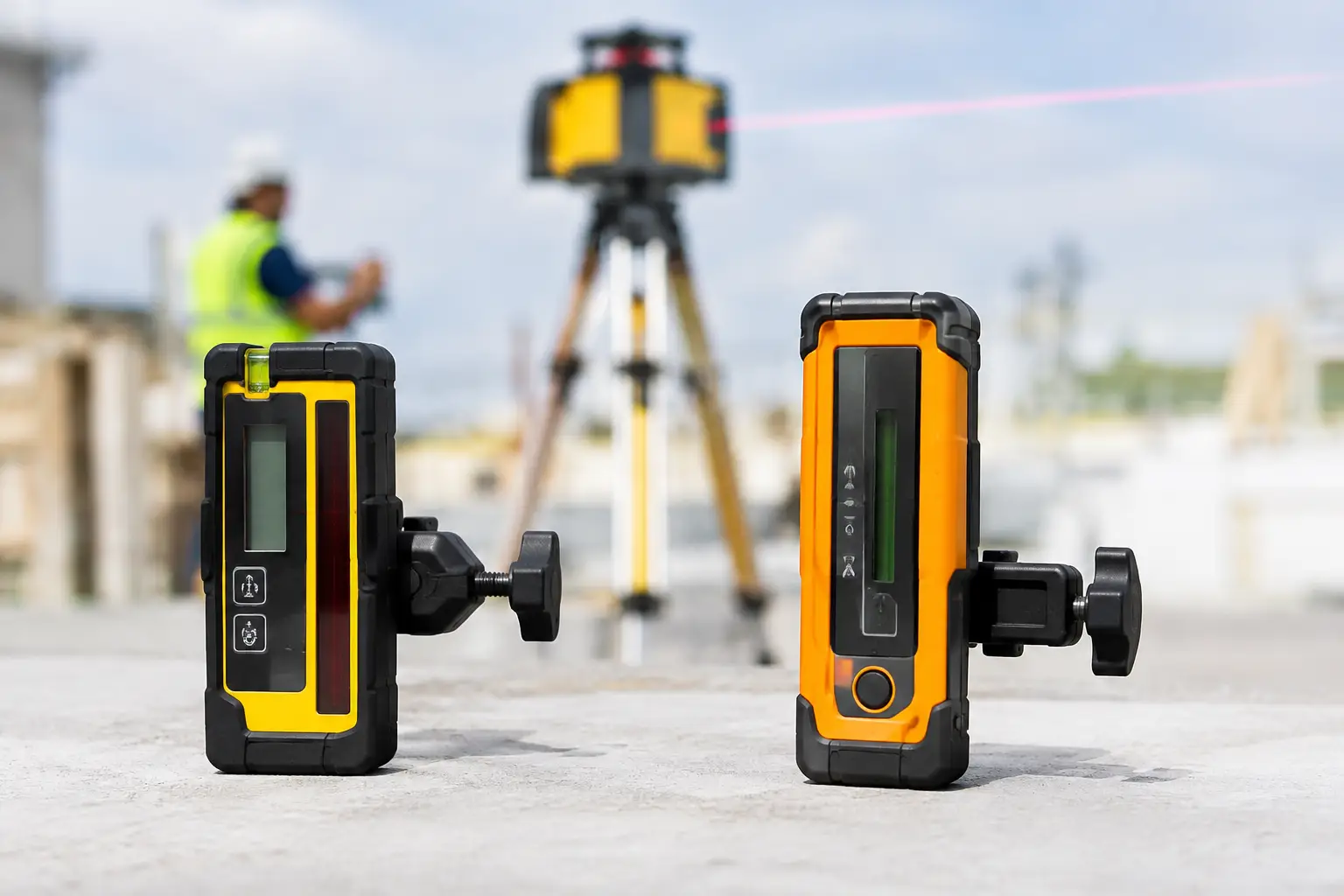
For a rotary laser with a receiver, the procedure is similar, only you read the marks through the staff and receiver. It is important to check multiple directions, not just one. The error can appear in the X-axis, the Y-axis, or only after turning the head. Such a test does not replace professional calibration, but it will quickly tell you whether the measured plane can be relied on.
Calibration is not just adjusting one screw
During professional service, the actual condition of the device is first checked. The technician checks self-leveling, horizontal deviation, operation of the rotary head, function of the buttons, display, receiver and power supply. In the case of slope and digital lasers, the correct reaction when adjusting the slope and locking the compensator is also addressed.
If the accuracy is outside the tolerance, calibration follows. This involves adjusting the measuring axes according to the control measurement, not simply cleaning the device. A properly calibrated laser must maintain the declared accuracy within the working range and, after rotation, must not transfer the error from one side of the structure to the other.
A distinction must be made between service calibration for routine construction work and officially required metrological verification. For most craftsmen, construction companies and assembly teams, professional inspection and accuracy adjustment are sufficient. However, if a contract, internal regulations or designer requires a specific calibration document with a precisely specified regime, this requirement must be addressed in advance.
What goes wrong most often during repairs
Many malfunctions do not occur all at once. They start with a damaged tripod thread, a loose mount, a dirty laser window, or a battery that can no longer provide stable power. The device can then behave erratically and the operator is left looking for a fault in the receiver or in the strong sun.
The consequences of a fall are also common: cracked covers, damaged buttons, a blocked compensator, a malfunctioning rotation motor, or a displaced optical part. For battery-powered devices, the connectors, chargers, and battery blocks themselves are the problem. In the case of receivers, the problem is usually a damaged display, a broken pole mount, or a dirty sensor window.
Repair makes economic sense when a specific part can be replaced and the accuracy of the instrument can be restored. For a cheap, old, or severely damaged model, it may be more sensible to buy a new laser with pre-calibration and available service. The cost of the repair, the availability of parts, the age of the device, and whether you need the device immediately on order are all factors.
Don't wait for a small error to turn into an outage
A damaged charger or cracked housing can sometimes be bypassed for a short time. The problem is that dust and moisture can more easily enter the device through a damaged seal. Subsequent repairs can be more expensive and the downtime longer. When you notice a change in behavior, address it before you need the laser for concreting or final installation of elements.
When sending the device for service, a brief description of the problem will help. State whether the device was dropped, whether the problem occurs constantly or only occasionally, how the indicator light behaves, and whether you have tried a different battery or receiver. This will help the technician more quickly distinguish between a device error and an accessory problem.
Proper use will extend the life of the laser
The leveling device belongs in the trunk, not in the car tools. When transporting, secure the compensator, if the model allows it, and protect the rotary head from impact. The tripod must be stable. Even a perfectly calibrated device can gradually shift during operation on soft ground.
After use, remove coarse dirt with a soft, dry cloth. Do not clean the optical window with aggressive solvents or a rough cloth that may scratch it. If the device gets wet, let it dry in a normal, ventilated room and do not charge it immediately in a closed case.
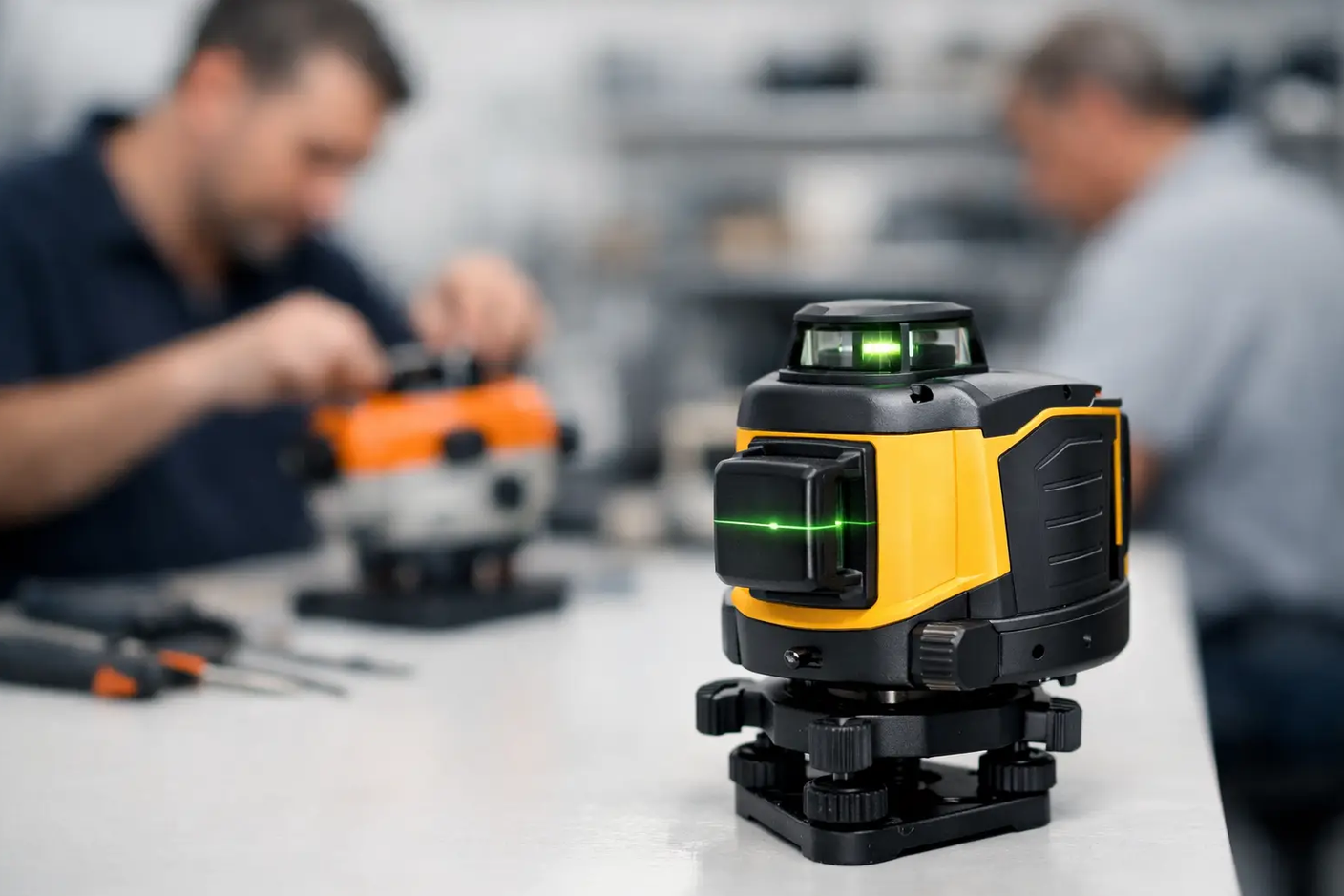
When working in the sun, do not automatically consider the poor visibility of the beam as a malfunction. Outdoors, an external receiver is used to capture the rotating beam even where the eye cannot see it. The green beam is more noticeable to the human eye, especially indoors, but even it will not replace the receiver at a greater distance and in bright sunlight.
Service, parts and real availability
When buying measuring equipment, it is worth looking beyond the price of the laser itself. The device may be inexpensive, but without an available charger, battery, holder, receiver or replacement cover, it becomes disposable equipment in the event of a malfunction. It is important for a professional to have someone to call, to be able to get advice and to get a clear answer as to whether a repair is possible.
Rotary Lasers - Levels provide warranty and post-warranty service, calibration and repairs of our own equipment and devices of other brands. The advantage is the possibility of personal consultation and testing of the equipment in Švábovce near Poprad. With commonly used parts, it is essential that the solution is not searched for weeks when a team is on the construction site.
Before handing over the device, prepare the laser, or the battery and charger if the fault is related to the power supply. Pack the receiver, holder or staff if the problem occurs when using them. The more accurately the fault is checked as a whole, the smaller the risk that the device will return functional, but the assembly will still measure unreliablely.
Accuracy on a construction site cannot be judged by eye. If you have even the slightest doubt about a measurement, check it before the next working day. One timely calibration is often cheaper than repairing a finished job that has been ruined by a subtle deviation.