When the formwork is ready and the mixer is on the road, there is no room to measure the height with a hose level in several places. A rotating laser for concreting foundations gives the whole lot one fixed height plane. The mason sees where to pull the concrete, the person at the pump knows where the material is still missing, and the foreman has control over whether the foundation slab or strips are not sagging out of tolerance.
When it comes to foundations, millimeters matter, but so does the pace of work. A poorly transferred reference often only becomes apparent when laying the brickwork, installing doors, floors or installing the roof. The repair then costs many times more than precisely aligning the formwork before pouring the concrete. That's why a rotating laser has its place already during the excavation, not just during the final inspection of the fresh concrete.
Where can a rotating laser help for concreting foundations?
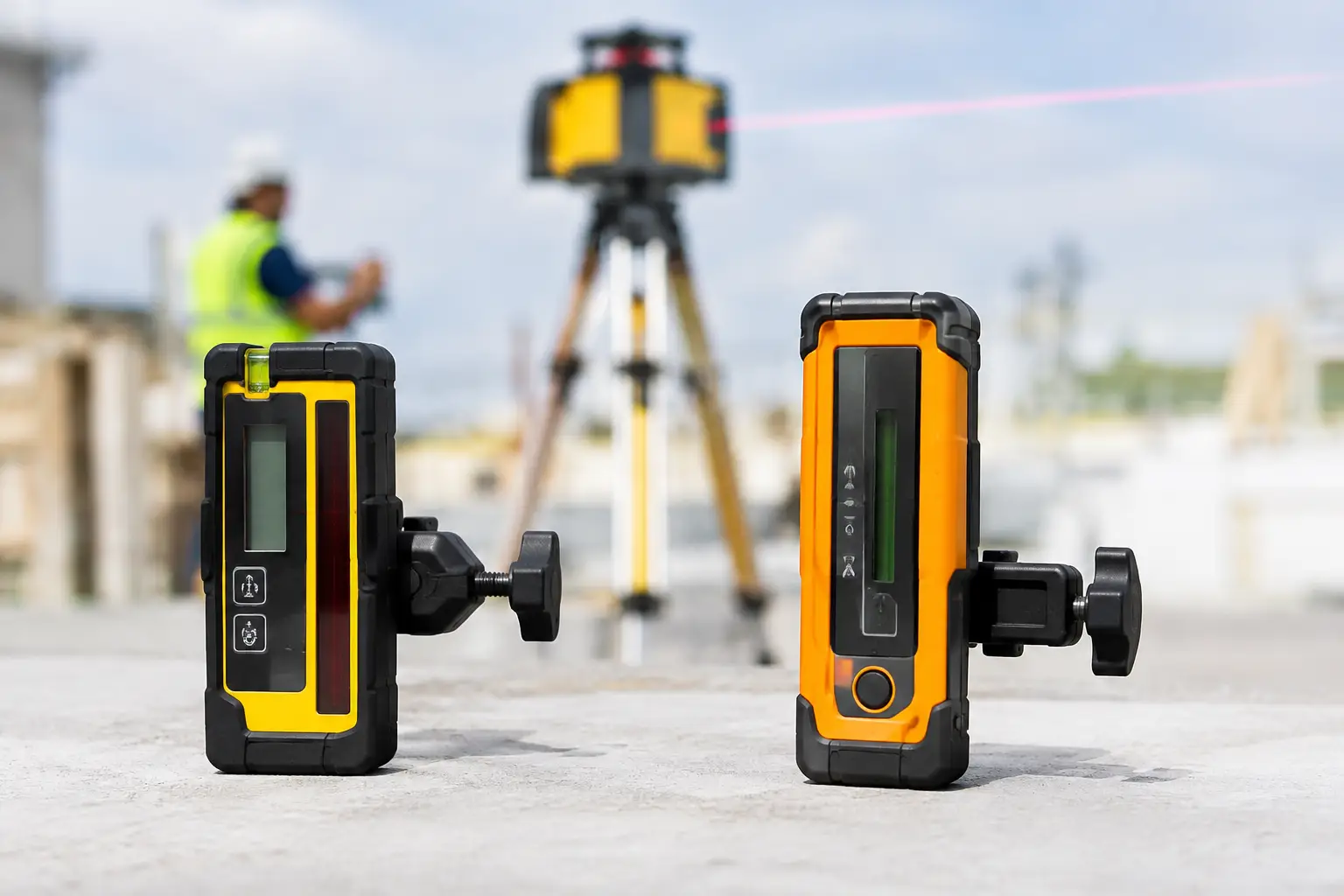
After self-leveling, the laser creates a horizontal plane throughout the work area. When working outdoors, the beam is usually not read with the naked eye, but with an external receiver mounted on the staff. The receiver beeps or displays the position of the beam, and the worker immediately knows whether to raise or lower the staff.
First, the laser is used to transfer the design height to the corners of the structure. This height is then transferred to the pegs, roxors, formwork boards or height targets. For strip foundations, the bottom of the excavation, the gravel bed and the top edge of the formwork are checked. For a foundation slab, the height of the subgrade, insulation, curry net and the final level of concrete is checked.
It is important to distinguish between checking the height and measuring the layer thickness. The laser will determine a reliable reference plane. If you know the required distance from this plane to the finished concrete, you can set the correct reading on the staff and check the same reading over the entire area. This will avoid a situation where the slab is correct at one corner, but a few centimeters are missing in the middle or on the opposite side.
Example from a common building
You place the laser outside the excavation on a solid tripod so that no one can move it. After self-leveling, you use the receiver to read the height at a known reference mark. Then you set the staff so that the specific reading marks the upper edge of the future concrete. The worker walks along the formwork with the staff and later checks the fresh concrete. He does not have to count again at every corner - he always follows the same set figure.
For larger slabs, it is practical to divide the area into strips. The concreting process goes more smoothly when the operator of the vibratory screed or screed bar has clear markings and continuous control with a receiver. The laser does not replace experience in spreading concrete, but it does take the guesswork out of where the correct height is.
Choosing a laser according to the scope of work
For regular foundation work on family homes, garages, retaining walls and smaller buildings, an automatic self-leveling rotating laser with a receiver is most often the right choice. It is not only the color of the beam that is important, but also the accuracy, working range with the receiver, durability and completeness of the set.
In the open sun, do not rely on the visibility of the beam. The green beam is more noticeable to the eye and helps well indoors or in the shade. However, when concreting foundations, the external receiver is decisive. It captures the beam even at a greater distance and allows you to work accurately even on a bright day. Therefore, when working outdoors, the receiver is more important than the impression of the beam intensity itself.
A standard receiver is sufficient for approximate formwork leveling and height checking. If you need to see the deviation directly in millimeters, choose a digital sensor with millimeter reading. It is faster for checking the subgrade, when transmitting heights to multiple points and where you want to have a clear record of the deviation without guessing based on arrows.
Compare the accuracy of the laser in meters. In the case of foundations, the error is transmitted throughout the entire structure, so it is not enough to buy the cheapest device without verification. The device should come pre-calibrated and ready to work. However, even a high-quality laser should be checked, especially after a fall, transportation in a loose van or after prolonged use in a dusty environment.
When do you need a digital slope model?
A horizontal laser is good for the top edges of foundation strips and slabs. However, if you are also dealing with drainage, storm sewers, connections or drainage around a building, the slope comes into play. This is where a digital rotating laser makes sense, as you can set the slope separately in the X and Y axes.
It is not a necessity for every foundation slab. For simple level concreting, you would be paying for this feature unnecessarily. However, for regular excavations for pipes, gutters and landscaping, the slope model saves time and reduces the risk of incorrect slope. Decide based on the types of jobs you do most often, not on one exceptional project.
The right position is as important as the device
Do not place the laser on soft soil, on a formwork board or where a mini excavator is driving around it. The safest option is a solid tripod away from the working movement. The stand must be stable and the laser within reach so that the receiver can catch the beam at all the points being inspected. For a large area, it is worth choosing a central location if it is not obstructed by machines and a pump.
After switching on, let the device complete self-leveling. If it signals that the tilt range has been exceeded, do not adjust the result by guessing - level the tripod or move the laser to a more suitable location. The working range of self-leveling has its limits and correct positioning is the basis for accurate measurement.
Always fix a control point before you start work. Read the height at a known location, write down the value, and return to it during the day. If the reading changes for no apparent reason, someone may have moved the tripod or the position of the batten has changed. This simple habit can catch an error before you pour the entire slab.
The receiver, battens and tripod are not optional accessories.
The rotating laser itself is only part of the setup. Without a receiver, you will be limited outside in bright light. Without a solid staff, the height reading will be inaccurate. And without a stable tripod, even an accurate instrument can show unusable values because its position will change.
A five-meter telescopic batten is especially practical for deeper excavations and for transferring height from the terrain to the formwork. The receiver holder must be held firmly and perpendicular to the batten. If the sensor is tilted or moves in the holder when moved, the result will fluctuate. With a digital receiver, set the desired unit and tolerance before work so that everyone on the site reads the same data.
For construction practice, protection against dust and splashing water is also important, for example IP54 under normal working conditions. However, the laser is not intended to stand in a puddle or be cleaned with pressurized water. After concreting, wipe it down, charge the battery or check the batteries and store it in the case. This will extend the life of the device and accessories.
The most common mistakes when checking concrete
The first mistake is that the height is only checked on the formwork. The formwork may be correct, but when the concrete expands, a local wave or slump will occur. Also check the area between the guide points, especially for larger slabs and more complex reinforcement.
The second mistake is moving the laser without re-establishing the reference. When you have to move it for pump, range or safety reasons, read the control point again. Otherwise, you may continue with a different elevation plane without it being visible.
The third mistake is the use of damaged or untested equipment. The laser may not stop working after a fall, but it may lose accuracy. When it comes to work equipment, it pays to have service, calibration and spare parts available. Rotary Lasers - Levels provide pre-calibration, advice and service, so the device does not have to be out of work unnecessarily in the event of a malfunction.
If you want to have peace of mind when concreting the foundation, prepare a height reference before the concrete arrives, place the laser away from traffic and check the plane continuously. A correctly selected set with a receiver, batten and stable tripod will not only result in a precise slab, but also in faster and more reliable work for the entire team.