You don't have to immediately put your rotary laser aside after a fall, a dead battery or a worn thread. The right spare parts for a rotary laser can often get the device back into normal operation for a fraction of the price of a new device. However, it is important not to buy a part based solely on a photo or the lowest price. When it comes to measuring technology, compatibility, the condition of the connectors, accuracy and whether the part will not affect the correct function of the laser in the field are decisive.
When working on excavations, concreting, sewerage or assembling structures, the rotary laser is exposed to dust, shock, rain and everyday carrying. Over time, the battery loses capacity, the receiver holder gets loose and a damaged cover can let moisture into the electronics. Not everything is worth repairing, but with available parts, servicing the device makes clear economic sense.
When to replace a part and when to call for service
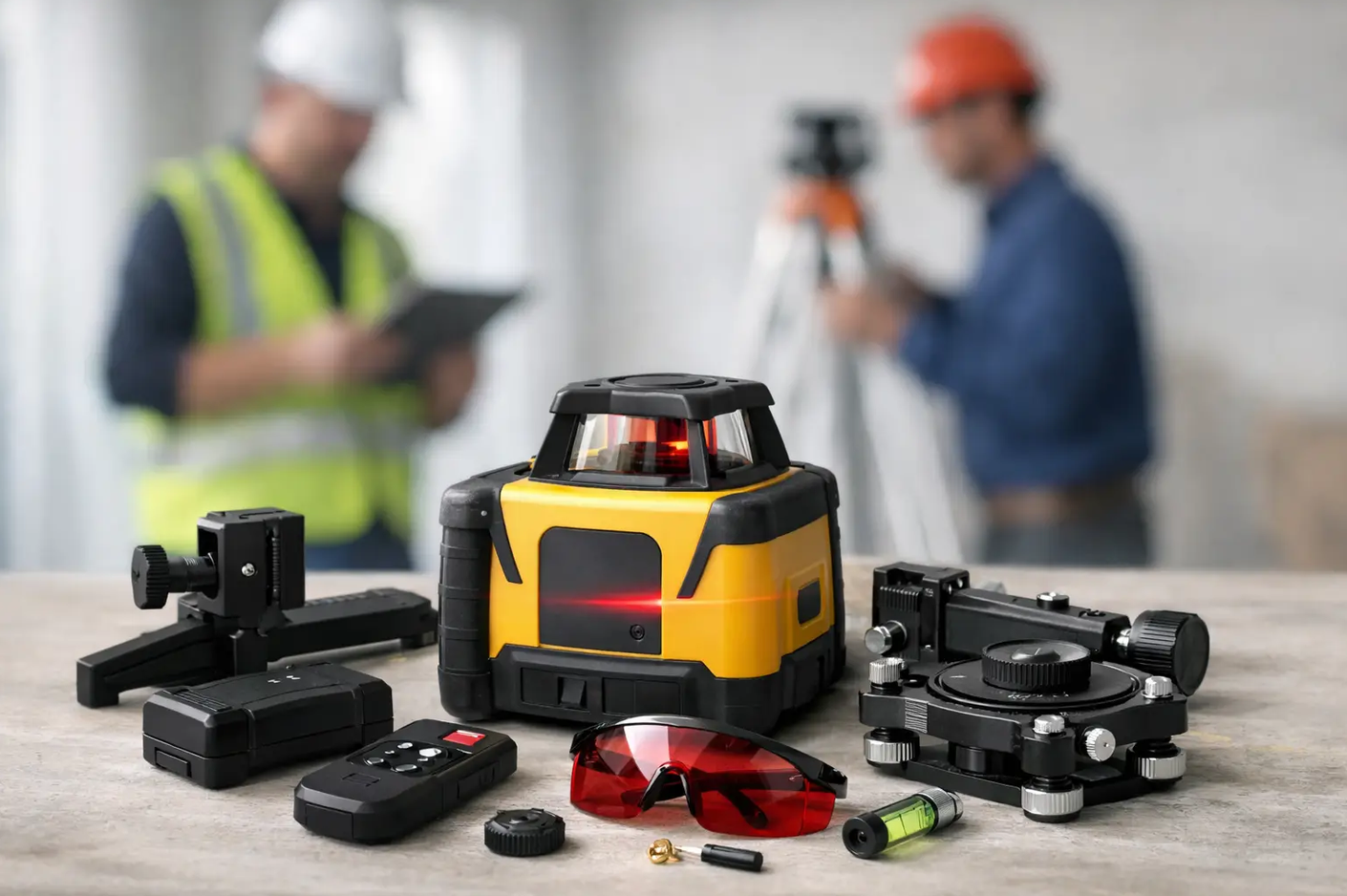
The simplest parts are those that do not change the measuring accuracy of the device. These include the battery, charger, case, target, tripod adapter, receiver holder or mounting screw. For these items, it is especially important to check the type of connector, voltage, dimensions and mounting method.
A different situation occurs when the laser head, internal leveling mechanism, optics or electronics are damaged. If the laser flashes after a fall, does not stop self-leveling, creates an irregular plane or has a different beam height when rotated 180 degrees, replacing the visible part alone may not solve the problem. Such a device needs inspection, repair and subsequent calibration.
The rule of thumb is simple: if a part holds, powers, or carries a device, it is common to replace it. If a part determines the plane, slope, or position of a beam, it is necessary to verify accuracy after the intervention. On a construction site, even a small deviation will grow into a problem over a longer distance with the height of the concrete, the fall of the pipe, or the installation of the structure.
Most common spare parts for rotary lasers
Batteries and accumulators
The battery is one of the most frequently replaced items. A typical sign of wear is significantly shorter operation, spontaneous shutdown or inability to charge the battery to full capacity. When buying, it is not enough to compare only whether the battery physically fits into the device. Its voltage, cell type, connector and protective electronics must fit.
A spare battery is especially practical when working all day without electricity. One works in the laser, the other is charged in the car or from a generator. However, with an older device, consider the condition of the charger. A damaged cable, a heated connector or fluctuating charging can unnecessarily damage the new battery.
Chargers and power adapters
The charger must be designed for the specific type of battery and device. Using an adapter with the wrong voltage can damage the battery and the laser electronics. With universal replacements, it is necessary to check not only the output voltage and current, but also the polarity of the connector and its diameter.
If the device is charging through a damaged socket or the connector only holds in a certain position, it is not a small matter. On a construction site, the error often becomes apparent just when you need to start measuring. Replacing the connector or charger is cheaper than downtime due to an uncharged laser.
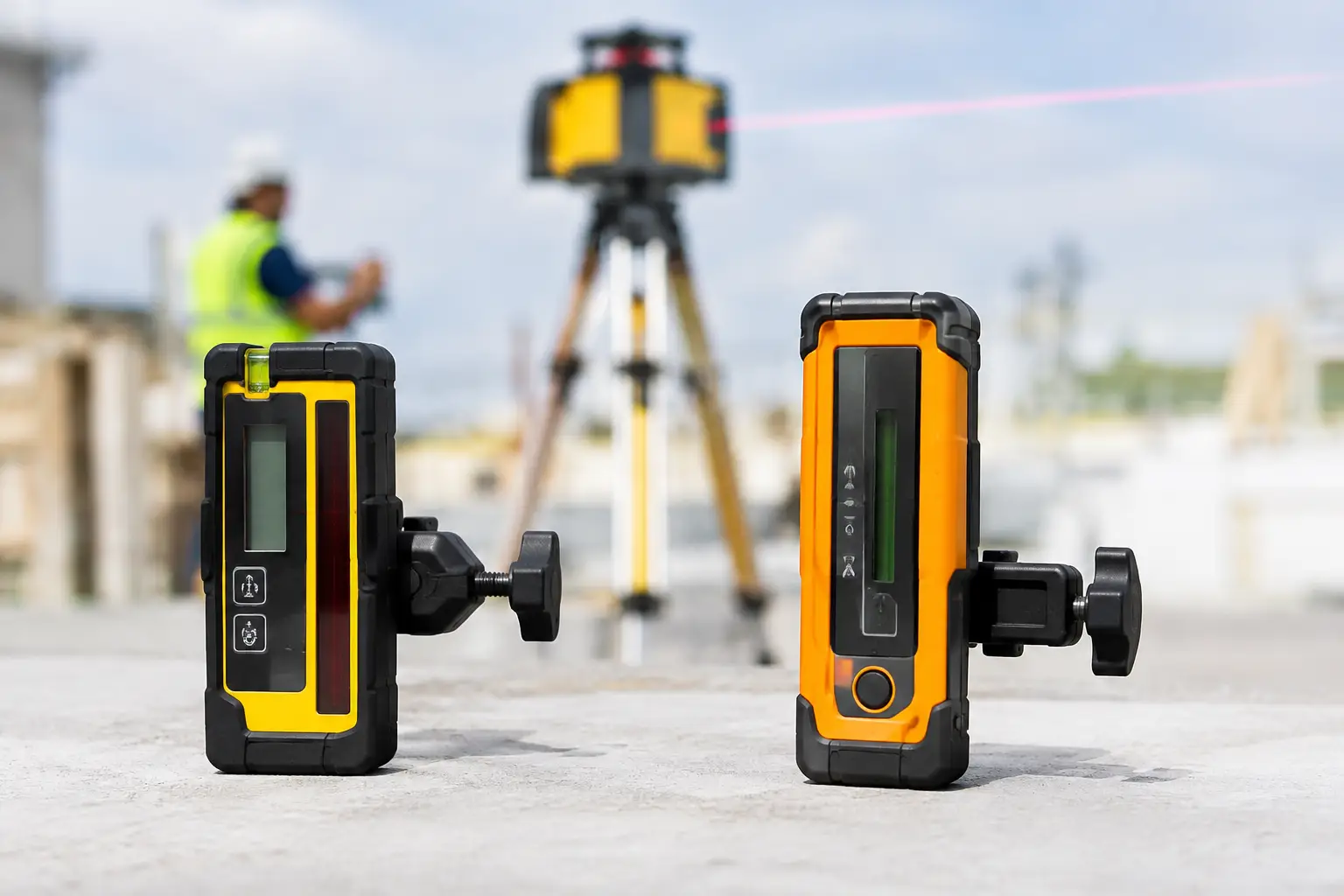
Receivers, holders and clamps on the batten
When working outdoors, the external receiver is more important than the visibility of the red or green beam itself. In the sun, you work according to the receiver signal, not whether you can see the beam with your eyes. If the receiver does not respond, first check the batteries, the cleanliness of the sensor window and the selected accuracy mode. If the problem persists, it may be better to replace the receiver than to spend a long time searching for a fault in the field.
The receiver holder must firmly attach the receiver to the leveling staff. The play in the holder means that each time you move or tighten it, you will get a different value. This slows down the work for a normal height measurement, but is unacceptable for a digital receiver with a millimeter reading. Therefore, do not buy the holder only according to the width of the staff, but also according to the specific shape of the receiver and the method of locking.
Covers, cases and small fasteners
A damaged carrying case may seem like a cosmetic issue. In fact, it protects the laser, receiver, and charger when moving between projects. If the case is missing foam padding or the device is loosely bumping against accessories, the risk of miscalibration increases.
Threads, caps, seals and screws are equally important. A rotating laser is often mounted on a tripod with a standard thread. A stripped thread, a bent adapter or a missing connector cap can disable an otherwise functional device. The original protection rating of the device, for example IP54, must be respected for covers and seals. A replacement part that does not seal properly will reduce the resistance to dust and splash water.
How to verify compatibility before ordering
The most reliable information is the exact model designation from the label of the laser, receiver or battery. Take a photo of it before dismantling. For batteries, write down the voltage, capacity, connector type and contact layout. For holders and adapters, note the thread diameter, mounting height and locking method.
The brand name alone is not enough. Two devices from the same manufacturer may have different battery packs, charging connectors, and receivers. In addition, it is necessary to check whether the receiver can work with the frequency of a specific rotary laser. Not every receiver is universal, and a combination of incompatible devices may only appear to work at a short distance or not at all.
For older models, it is worth consulting before ordering. Just specify the model, describe the defect and send a photo of the part or connector. Rotary Lasers - Levels has selected parts in stock and if compatibility is unclear, it is wiser to get a technical answer than to order a part that will not fit the device.
Replacing a part does not replace checking accuracy.
After replacing the battery, holder or case, you can use the device normally as soon as the function is verified. However, after a hard impact, replacing parts in the area of the rotating head or tampering with the device's interior, perform a control measurement. Place the laser on a solid surface, let it self-level and compare the height of the plane when turning the device in opposite directions.
This orientation check does not take over the role of calibration, but it quickly shows if something is clearly wrong. If the values do not match or the laser behaves abnormally, do not continue with precision work just because the beam is lit. A functional beam does not mean an exact horizontal plane.
When is the repair still worth it?
For a device with available accessories, it is usually worth replacing the power supply, receiver, mount, cover, or damaged controls. In the case of serious damage to the electronics, the decision depends on the age of the device, the cost of repair, the availability of parts, and whether you also need the laser to adjust slopes in the X and Y axes.
For regular work at height, it may be reasonable to repair an older basic model. However, if you often do drainage, terrain slopes or precise foundation work, compare the cost of repair with a digital rotating laser and a receiver with millimeter reading. Sometimes it is more profitable to keep the original device as a backup and move the main measurement to the newer technology.
A well-chosen spare part makes sense when the device measures reliably again after replacement, holds the setting and can handle another season of work. If you are not sure of the cause of the malfunction, the decisive factor is not the quick purchase of the part, but the precise determination of the defect before work on the construction site stops.